
While Sonoma County is world-renowned for its rolling vineyard-covered hills and award-winning wine estates, its true defining feature lies in its extraordinary geographical diversity. Within a single hour’s drive, travelers can step beneath the shaded canopy of a 1,400-year-old redwood forest, trace the curves of wild coastal headlands, and look out across volcanic mountain ridges. Understanding Sonoma County natural wonders means looking past the cultivated vine rows to explore the powerful geological forces, ocean currents, and microclimates that shape Northern California’s most vibrant ecosystems.
The Ecological Map of Sonoma County
Sonoma County’s terrain is defined by its position along the Pacific Rim. Tectonic movement along the San Andreas Fault system created a dramatic topography featuring mountain ridges, river valleys, marine terraces, and deep ocean canyons. Crucial to this entire ecosystem is the California Current, which brings cold Arctic water southward along the coast. When this cold water meets warm inland air, it creates thick marine fog banks that act as a lifeline for coastal rain forests during hot summer months.
| Ecosystem Region | Key Landscapes | Notable Wildlife & Flora |
|---|---|---|
| Redwood Canyons | Old-growth Coast Redwoods, moist forest floors | Banana slugs, osprey, sword ferns, sorrel |
| Rugged Pacific Coastline | Marine terraces, sea stacks, coastal bluffs, beaches | Harbor seals, gray whales, pelicans, coastal scrub |
| River Basins & Estuaries | Floodplains, tidal marshes, river mouths | Steelhead trout, river otters, migratory waterfowl |
| Inland Volcanic Ridges | Oak woodlands, geothermal vents, mountain peaks | Black-tailed deer, golden eagles, wild chaparral |
Ancient Giants: Armstrong Redwoods State Natural Reserve
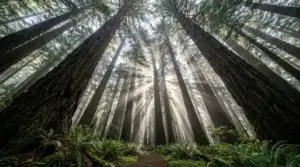
Tucked into the lower Russian River Valley near Guerneville, Armstrong Redwoods State Natural Reserve preserves a magnificent 805-acre remnant of the primeval Coast Redwood (Sequoia sempervirens) forest that once covered vast portions of the West Coast. These temperate rainforest giants are the tallest living organisms on Earth, often surviving for well over a thousand years.
Highlight Trees and Trails
The reserve features flat, highly accessible walking paths such as the Pioneer Nature Trail. Along this loop, visitors can view landmark trees that illustrate the sheer magnitude of the species:
- The Colonel Armstrong Tree: The oldest tree in the reserve, estimated to be over 1,400 years old.
- The Parson Jones Tree: The tallest tree in the grove, soaring over 310 feet into the air—longer than a professional football field.
- The Icicle Tree: Famous for its massive burl formations hanging from the trunk, a mystery of botanical growth.
For park maps, trail status updates, and visitor information, explore the official California State Parks Armstrong Redwoods Page.
Where the Forest Meets the Sea: The Russian River Estuary
Following the Russian River west from Guerneville leads directly to the small coastal town of Jenner, where the fresh river waters empty into the Pacific Ocean. This tidal estuary creates a rich marshland habitat where river otters, harbor seals, and dozens of migratory bird species gather to feed and rest. Watching the collision of river current and Pacific surf from above the Jenner headlands provides a front-row seat to one of the county’s dynamic water systems.
The Wild Pacific: Sonoma Coast State Park
Stretching 17 miles from Bodega Head in the south to Vista Trail north of Jenner, Sonoma Coast State Park consists of rugged headlands, hidden coves, natural rock arches, and dramatic sea stacks. Unlike sandy southern beaches designed for casual swimming, the Sonoma Coast is a raw, powerful ocean wilderness marked by heavy surf and dramatic bluffs.
1. Goat Rock Beach & Harbor Seal Rookery
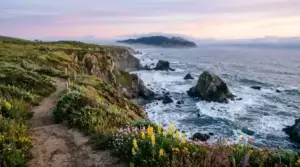
Located near the river mouth, Goat Rock Beach is famous for its massive flat-topped sea stack rock and sweeping vistas. The sandy spit at the river mouth serves as a protected haul-out site and rookery for a resident colony of harbor seals. Visitors are asked to keep a safe distance of at least 50 yards to protect the nursing pups and resting adults.
2. Bodega Head & Coastal Bluffs
At the southern anchor of the park, Bodega Head forms a rocky peninsula that shelters Bodega Harbor from the open ocean. High blufftop trails offer panoramic views of the ocean and serve as prime vantage points for spotting migrating gray whales between December and April as they travel along the coast.
3. Kortum Trail
For hikers wanting to experience the coastal ecosystem up close, the Kortum Trail leads along open marine terraces connecting Shell Beach, Wright’s Beach, and Blind Beach. This open trail showcases coastal scrub plants, spring wildflower blooms, and ancient sea stacks left standing on dry land as sea levels shifted over thousands of years.
Inland Ridges & Geothermal Wonders
Moving inland toward the Mayacamas Mountains along the county’s eastern border reveals a dramatically different geological story. Volcanic activity millions of years ago left behind mineral-rich ash soils and subterranean geothermal reservoirs. To the north lies The Geysers, the world’s largest geothermal energy field, where natural steam vents out of the earth. These varied volcanic soils give inland valleys their distinct terroir, allowing grapevines to pull minerals from soils formed by ancient eruptions.
Practical Tips for Eco-Tourists
- Dress in Layers: Coastal microclimates mean conditions can change rapidly. Foggy, cool ocean winds can drop temperatures by 20 degrees compared to inland valleys.
- Respect Ocean Safety: Never turn your back on the Pacific Ocean along the Sonoma Coast. Dangerous “sleeper waves” and strong rip currents make swimming unsafe at most local beaches.
- Practice Leave No Trace: Stay on marked boardwalks in Armstrong Redwoods to avoid damaging shallow, delicate redwood root systems. Pack out all trash along coastal bluffs.
- Plan for Limited Connectivity: Cellular service can be spotty along coastal Highway 1 and inside dense redwood canyons; download trail maps before heading out.
Discovering the True Heart of Sonoma County
Exploring Sonoma County natural wonders reveals a landscape far deeper and more interconnected than any single vineyard tour can capture. From standing in quiet awe beneath ancient redwood canopies to breathing in the salty spray off Pacific sea stacks, connecting with these wild ecosystems provides a refreshing perspective on the natural beauty of California’s North Coast.