
Long before Sonoma County became a world-renowned capital of premium wine and farm-to-table culinary experiences, it served as the contested northern frontier of Mexican Alta California—a land defined by mission bells, military commandants, and revolutionary fervor.
The Cradle of Modern Sonoma County History
Understanding the deep roots of Sonoma County history requires looking past the manicured vineyards and stone tasting rooms to the tumultuous decades of the early 19th century. Between 1823 and 1846, this fertile region morphed from a quiet indigenous borderland into the strategic headquarters of Mexican military power, and ultimately, the birthplace of the California Republic.
The transformation of the region was largely directed by one pivotal historical figure: General Mariano Guadalupe Vallejo. Through his land grants, diplomatic ties, and agricultural vision, Vallejo laid the physical and economic blueprint for modern Sonoma County.
The Final Mission: Mission San Francisco Solano
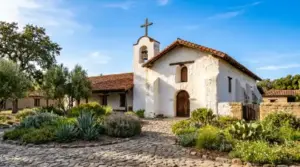
The written historical arc of the valley changed dramatically in 1823 when Father José Altimira established Mission San Francisco Solano. It was the 21st, final, and northernmost mission built in California, making it unique as the only mission founded under Mexican rule rather than the Spanish Crown.
Designed primarily to curtail expanding Russian influences from nearby Fort Ross along the coast, the mission rapidly developed basic agriculture, livestock herds, and early vineyards. When the Mexican government secularized the missions in 1834, the mission structures fell into disuse, but the surrounding settlement had already laid the groundwork for the town of Sonoma.
To explore preserved mission grounds, artifacts, and guided historical walking tours, visit the official Sonoma State Historic Park portal.
General Mariano Guadalupe Vallejo & The Adobe Era
Following secularization, the Mexican government dispatched a young, charismatic military officer named Mariano Guadalupe Vallejo to oversee the distribution of mission lands and secure the northern frontier. Vallejo laid out the massive 8-acre Sonoma Plaza—still the largest town square in California—and constructed the imposing Sonoma Barracks to house Mexican troops.
1. The Petaluma Adobe & Rancho Life
Vallejo was granted vast tracts of land, most notably Rancho Petaluma. Here, he constructed the Petaluma Adobe, a massive two-story timber and adobe brick estate that operated as a thriving agricultural enterprise. Thousands of cattle roamed the hills, while native and Mexican artisans produced hide, tallow, wool, and grain.
2. Early Viticulture Roots
Vallejo was among the first in the region to recognize the unique microclimates of the valley. Cultivating mission grape varieties near his estate, he produced commercial wines and advocated for expanded agriculture across the region, planting the seeds for what would eventually become the world-famous Sonoma Valley viticultural area.
The 25-Day Republic: The 1846 Bear Flag Revolt
By the mid-1840s, American settlers were migrating into California in increasing numbers. Tensions between the Mexican government and incoming American pioneers reached a boiling point on the morning of June 14, 1846, in the center of the Sonoma Plaza.
A Sudden Uprising
A group of roughly 30 armed American settlers, inspired by rumors of impending expulsion by Mexican authorities and encouraged by explorer John C. Frémont, surrounded General Vallejo’s home at the plaza. Despite Vallejo’s surprisingly welcoming stance toward American annexation, the insurgents placed the General under arrest and transported him to Sutter’s Fort.
Raising the Bear Flag
The insurgents raised a crude cotton flag featuring a red star, a painted grizzly bear, and the words “California Republic” on the plaza flagpole. For 25 short days, Sonoma served as the capital of an independent nation. The short-lived republic came to an end when U.S. military forces officially raised the American flag in Monterey, declaring California part of the United States amid the onset of the Mexican-American War.
From Historic Adobes to Commercial Vineyards
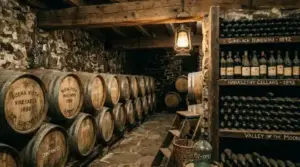
Following California’s statehood in 1850, General Vallejo adapted smoothly to the new political climate, serving as a state senator and helping shape early California governance. However, the agricultural landscape of Sonoma was shifting rapidly toward commercial winegrowing.
- Buena Vista Winery (1857): Hungarian immigrant Agoston Haraszthy, often dubbed the “Father of California Viticulture,” purchased land near Vallejo’s holdings to build Buena Vista Winery, introducing European Vitis vinifera cuttings to the region.
- Simi Winery & Northern Valleys (1870s): Winemaking expanded north into the Alexander Valley and Russian River Valley, cementing the county’s reputation for agricultural diversity.
- Preserving the Built Heritage: The ancient adobe structures, town plaza, and historic mission buildings were preserved over time, providing a tangible link to California’s early pioneer era.
Exploring Sonoma’s History Today
Today, visitors walking through downtown Sonoma can physically trace the steps of General Vallejo and the Bear Flag revolutionaries. The historic town plaza remains the heart of the community, surrounded by preserved 19th-century adobe structures, tasting rooms, and local eateries.
Key historic stops include:
- The Sonoma Barracks: Restored rooms showcasing military equipment, uniforms, and historical exhibits from the Mexican frontier era.
- Lachryma Montis: General Vallejo’s Victorian-style home located short walking distance from the plaza, preserved as a public museum showcasing personal artifacts and gardens.
- Petaluma Adobe State Historic Park: Located a short drive west, offering a glimpse into the massive ranching operations that fueled the 1840s local economy.
The Enduring Legacy of Sonoma’s Past
The story of Sonoma County is one of remarkable adaptation and heritage. From the quiet adobe walls of Mission Solano and General Vallejo’s vision to the dramatic birth of the California Republic, every chapter of Sonoma County history contributed to building the rich cultural and agricultural landscape residents and visitors enjoy today.